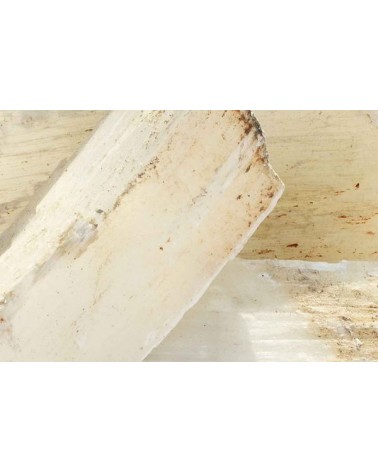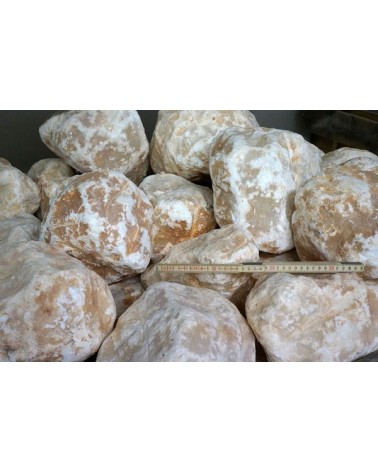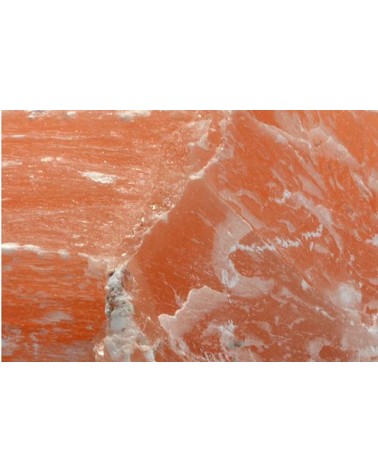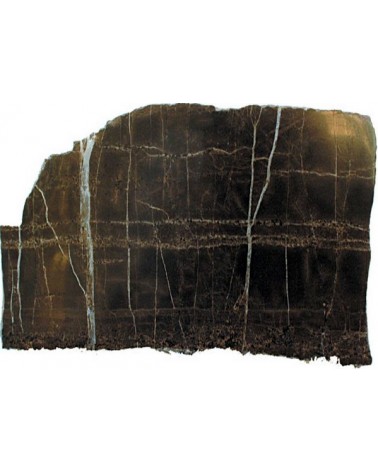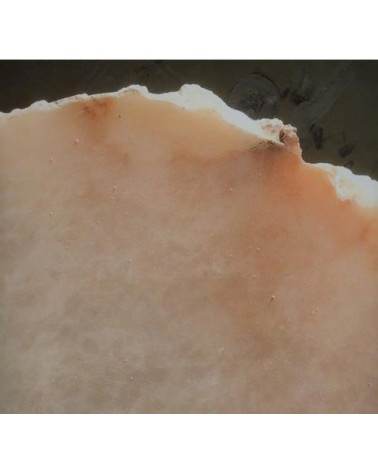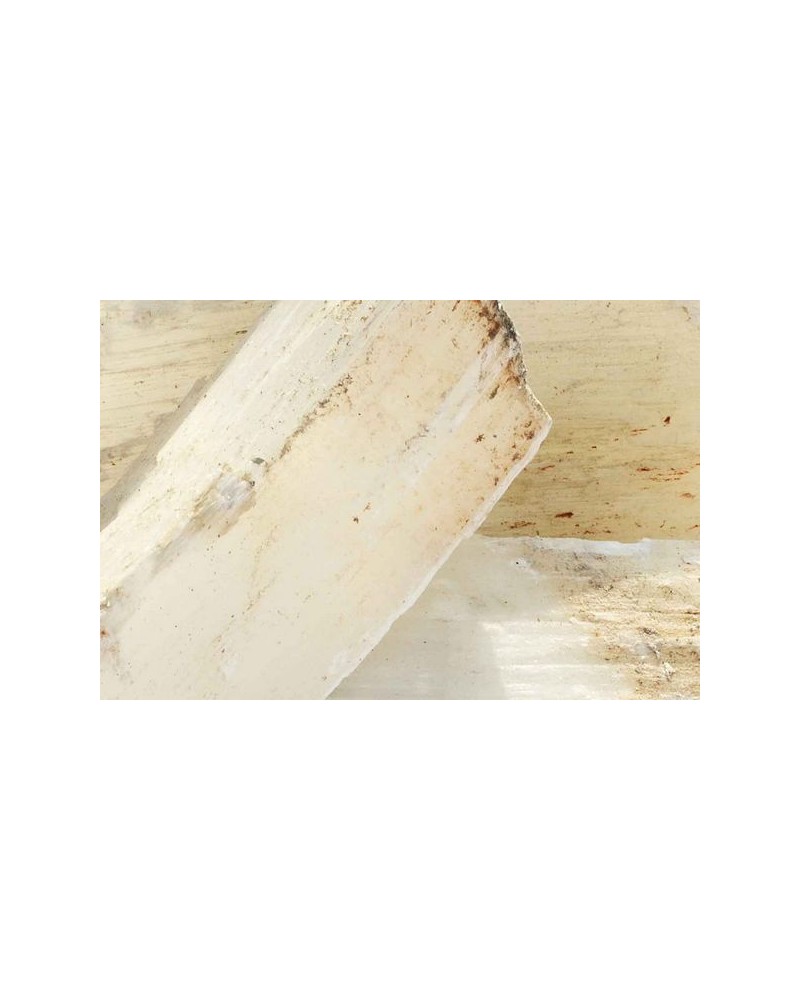
Very transparent in the crystal orientation, overall appearance milky-transparent.
TECHNICAL INFORMATION
| Origin: Morocco | Morocco |
| Hardening grade Mohs | 1,5 - 2 |
| Appearance | transparent |
| structure | homogeneous, crystalline |
| Density | 2.3 kg/dm³ |
| Special features | Not weather-resistant |
PROCESSING
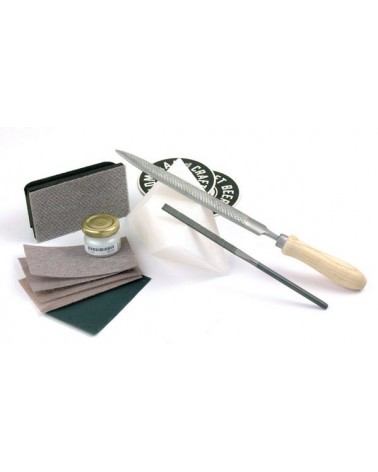
When processing by hand, we recommend only rasping and sanding, not chiselling. When rasping, follow the fibre direction if possible. For machining, we recommend a FOREDOM milling motor with flex shaft, handpiece and suitable milling cutters, for example, and the FOREDOM angle grinder for sanding. However, other milling and grinding systems can also be used.
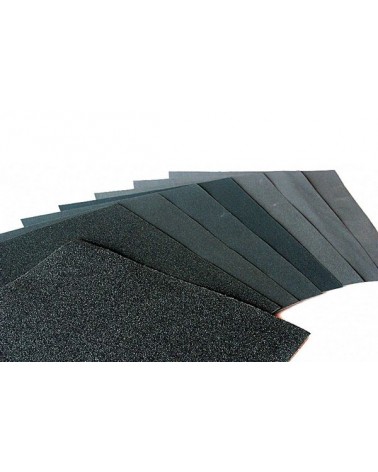
For all work, store the stone in such a way that as little vibration as possible occurs to prevent large pieces from breaking off in the direction of the fibres. The stone can be sanded and polished after rasping, sanding by hand up to 800 grit, then treat with Lithofin polishing cream. It's worth it!
FURTHER INFORMATION
Selenite is a crystalline form of the mineral gypsum, similar to alabaster.
Stone is a natural product. We endeavour to reproduce the appearance of our sculptural stones as accurately as possible in the illustrations so that the character of the stone can be recognised. Ultimately, each stone is a unique piece and the appearance may differ accordingly from the illustration.
Here you will find interesting information on calculating the weight of a sculptor's stone.